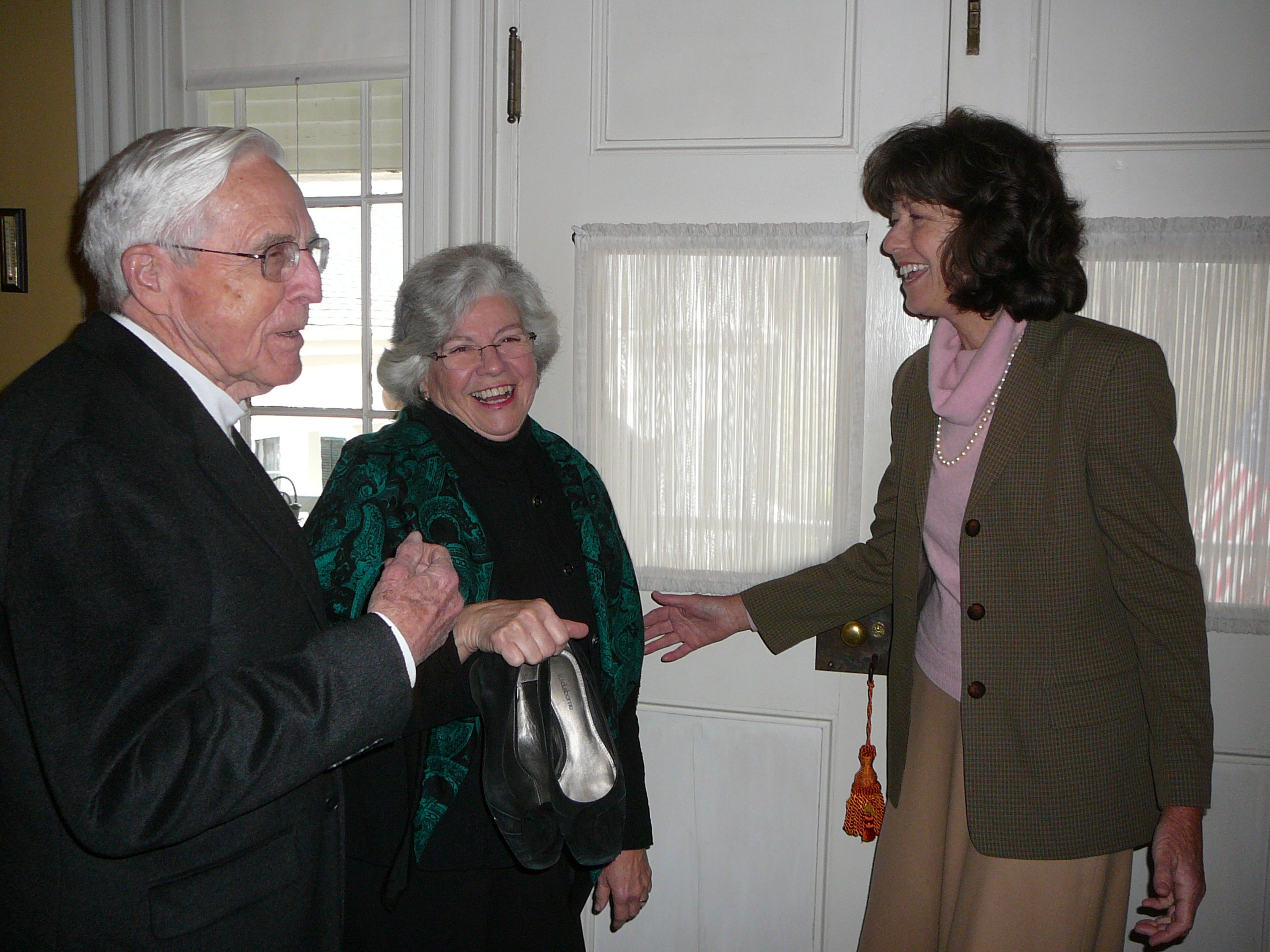
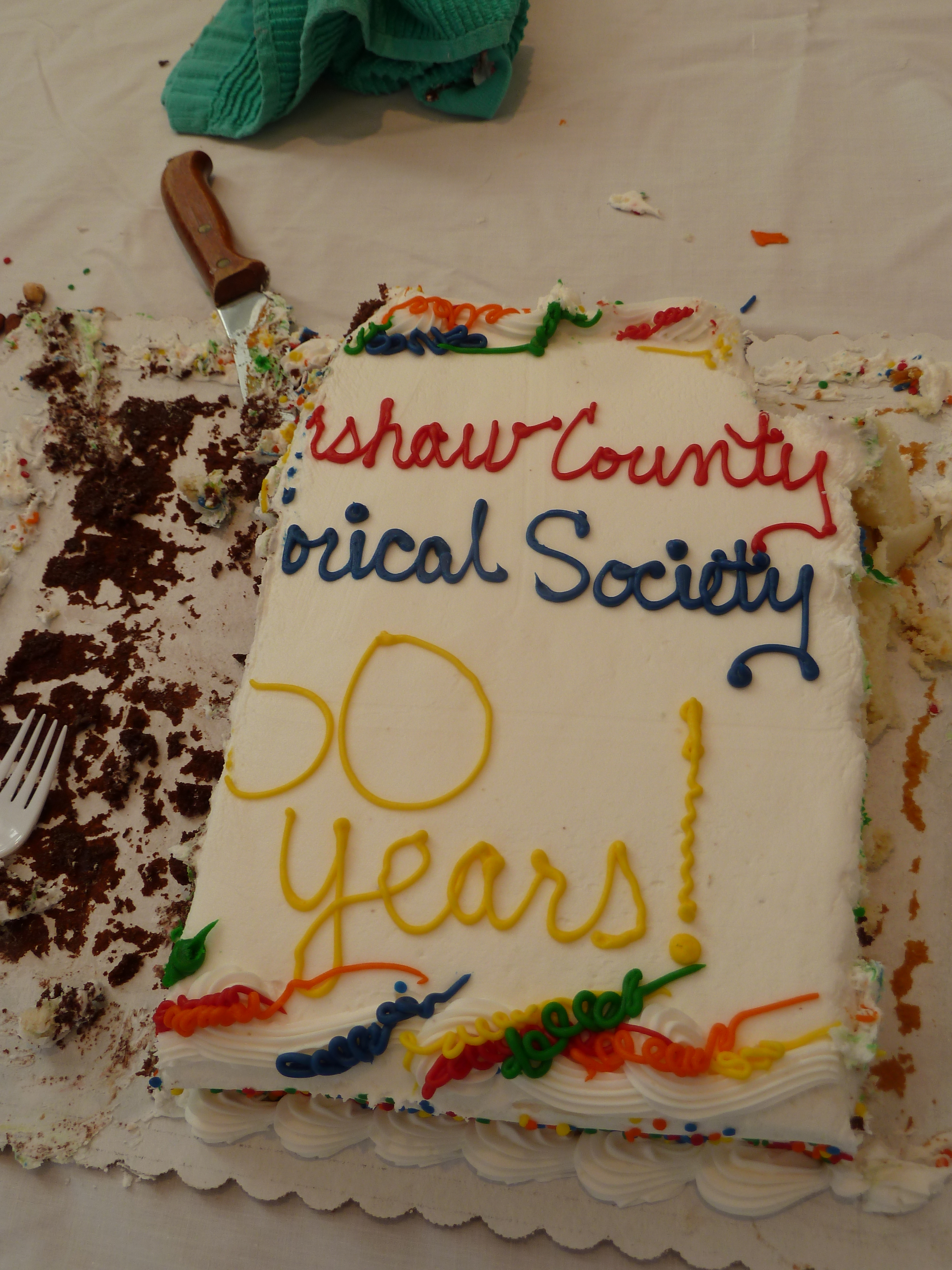
We are 60 and very active!

P1060939P1060870

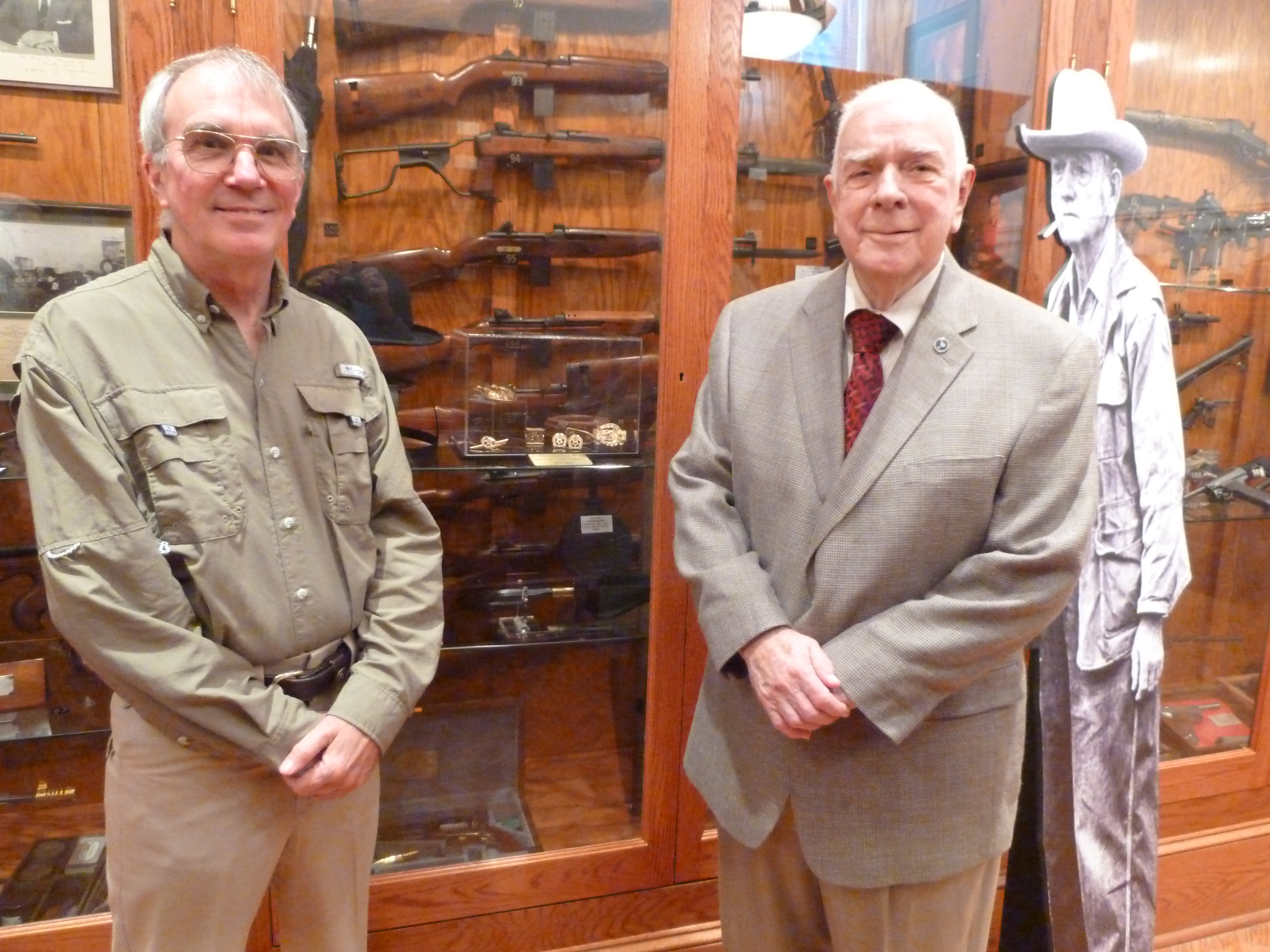
The Society is beginning new activities after observing its 60th anniversary with a dynamic program October 19, 2014, co-sponsored with the Camden Archives, where the group met with a full house of members and guests.

(If you missed having a slice of birthday cake with us, enjoy our report and photos of activities and join us next time!)

Speaking was delightful Camdenite Ross Beard, telling the stories that go along with the stunning Ross Beard Collection that the Archives is billing as “The Best Gun Collection in the South.” It is “Not Just Guns,” Archives director Katherine H. Richardson wrote recently. “The weapons comprise only about 25 to 30 percent of the entire collection when each three-dimensional object in the collection is counted.” Video

New officers elected are president Julie Putnam, vice-president Kathy Hill, and treasurer Lon Outten.

P1060862P1060934P1060874P1060872

Posted in Uncategorized

Natural History at Bloomsbury

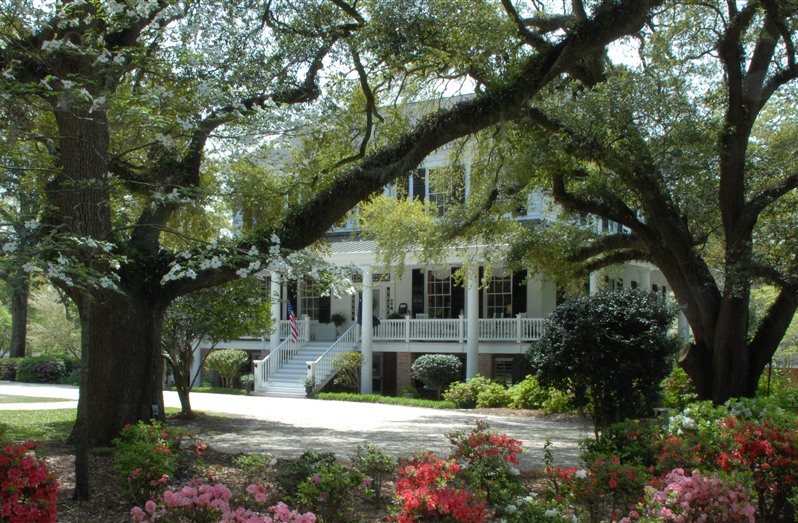
All seats were filled at the members-only program June 1, 2014, at beautiful Bloomsbury, Camden, SC, with entertaining appearance of Frenchman “André Michaux,” eighteenth-century naturalist, courtesy of re-enactor Charlie Williams. Camden lawyer and author Henry Savage Jr. lived at Bloomsbury while working with wife Elizabeth on a major biography of André Michaux and his son François, travelers through this area.

Historic Bloomsbury, now Bloomsbury Inn

Michaux, per Charlie Williams, at Bloomsbury with Historical Society

Michaux, per Charlie Williams, at Bloomsbury with Historical Society members

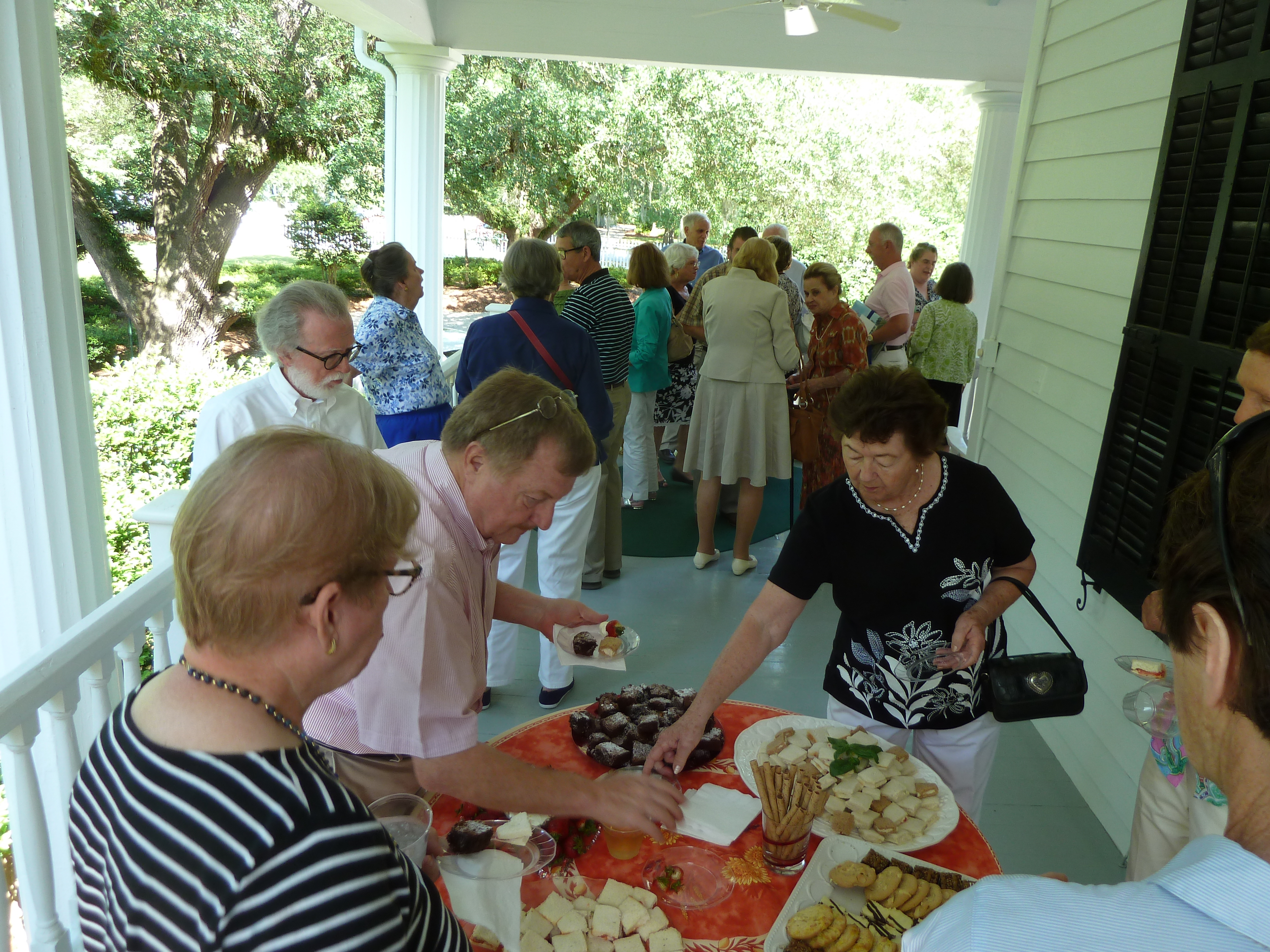
Refreshments on Bloomsbury porch

Refreshments on Bloomsbury porch

P1050603

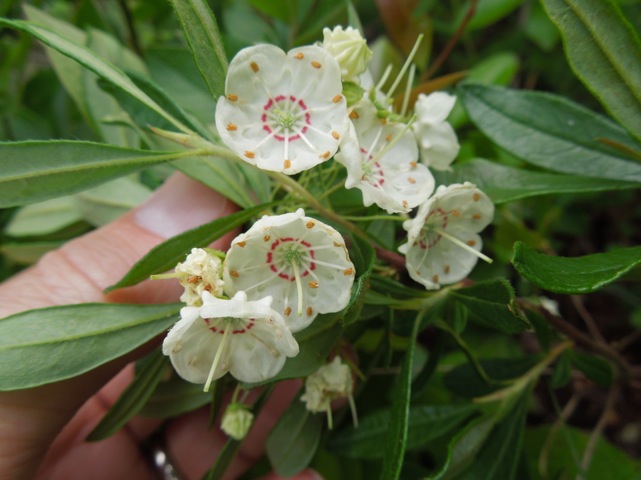
Kershaw County’s Lost Heritage?? Click to learn about Charlie Williams and a search last year with the Katawba Valley Land Trust  for Michaux’s Kalmia cuneata in Kershaw County. At the meeting at Bloomsbury June 1, Charlie urged Kershaw County Historical Society members to join the search in local places and to spread the word of it. If you don’t find the plant this year around June this year, he said, search again next year–you will at least enjoy a outing in nature!

Let us know if you see the Kalmia cuneata

kalmia cuneata

Kalmia cuneata


Posted in Uncategorized

Sandhill Perspective: Blaney-Elgin

SandHillsRevelationfrontcoverJPGA Sandhill Perspective: History, Legacy, Legend of Blaney-Elgin

Guest speaker Madge Black Strickland, author of a new book on her Kershaw County hometown, presented a lively discussion and Q & A on her work Sunday, February 2, 2014, at the Society’s program in the Robert Mills Courthouse in Camden.  Guests enjoyed an artifacts display and refreshments graciously provided by the Blaney-Elgin Museum and Historical Society of Elgin. The author autographed copies of A Sandhill Perspective: History, Legacy, Legend of Blaney-Elgin.

MadgeStrickland

Posted in Upcoming Program

A History of Kershaw County, South Carolina

History_of_Kershaw_County-267x400 A History of Kershaw County, South Carolina by Joan A. Inabinet and L. Glen Inabinet  for the Kershaw County Historical Society.  Hardbound, with dust jacket, over 700 pages  of text, illustrations, and extensive index.  Published by the University of South Carolina Press.

Click here to order your book from us. Our price per regular edition book $50 , plus shipping if required.

In Kershaw County the book is also sold at  the Camden Archives,  at Historic Camden, and at various vendors in local communities.  The book is also available from our publisher, USC Press, as well as from other book and online sources.

  • Click here to read what USC Press says about A History of Kershaw County, South Carolina.
  • Click here to listen to an interview with the authors of the book on NPR’s Walter Edgar’s Journal
  • Click here for other Society publications.

leather_bookNOW AVAILABLE – a numbered limited Special Edition (only 100 copies printed) of A History of Kershaw County – Navy leather binding with gold lettering.  Numbered and autographed on special page insert.  King Hagler (Haiglar) image on cover. A distinctive companion to vintage Historic Camden volumes.  Available only through the Society. Special Edition, $100

Click here to order your Special Edition book from us.

Tagged with:
Posted in Publication

Mendel L. Smith: Legislator & Judge

P1040054

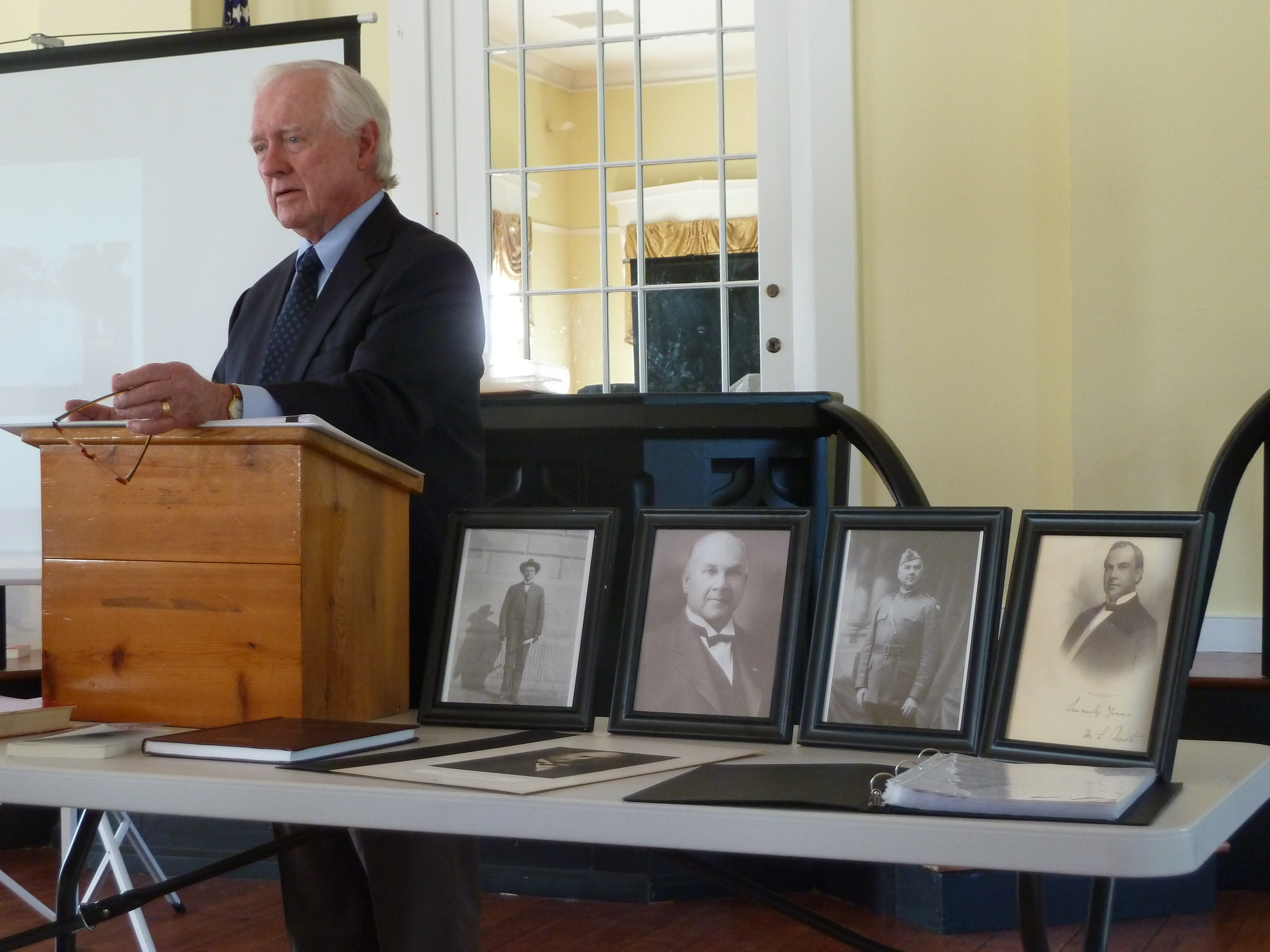
Society members October 20, 2013, learned details of the life of one District Five judge from another District Five judge, both of them Camden residents in different periods. Retired Judge Tommy Cooper informatively entertained with facts and anecdotes from his research on the life of the late Judge Mendel L. Smith, about whom he is writing a book. Slides and a display of items related to Judge Smith enhanced the presentation.

Posted in Program

The Cleveland Fire: Remembering May 17, 1923

By Harvey S. Teal, this article originally appeared in the Chronicle-Independent on May 15, 2013, as “A Matter of Conscience: Remembering May 17, 1923.”

In 1929, my family moved from Chesterfield County to a farm adjoining the farm of Donald Holland’s parents in the Cassatt community. I was a year old at the time but before many years passed, Donald and I established a friendship lasting until Donald’s passing in 2003.

By the late 1930s, I became aware of Donald’s parents and oldest sister, Margaret, being survivors of the Cleveland School Fire tragedy due to hearing them discuss the matter from time to time. On several visits with Donald to his grandparent’s home located about a half mile from the Cleveland School Fire site, I occasionally heard the matter discussed.

In May 1948, I accompanied Donald to Beulah United Methodist Church for a memorial service on the 25th anniversary of the fire. I will give more details about this service later in this column.

The fire received much attention immediately after it happened. Money was collected for survivors, the Red Cross was on the spot and a book on the tragedy quickly appeared. Monuments were erected and in the ensuing years, memorial services were held and articles appeared periodically in the local newspapers. As time passed the tragedy received less attention. Survivors picked up the pieces of their broken families, community, and lives and moved forward.

Beginning in the 1990s, as many of the survivors began to pass away, the tragedy received more attention. The Kershaw County Historical Society produced a publication and held two programs at which survivors were present and recounted their stories of that fateful night.

When Donald led a movement which secured funding for refurbishing the school monument, landscaping the site, restoring the fence and gates and refurbishing the monument at Beulah United Methodist Church where most of the 77 were buried in a mass grave, there can be no question as to how much this matter was in Don’s consciousness. Right before his death, Don was in discussions with Dale Hudson about publishing Dale’s book he was writing on this great tragedy.

In my book, Partners with the Sun, South Carolina Photographers, 1840-1940, published in 2001, I reproduced two photographs of the aftermath of the fire taken the next day by Columbia photographer John A. Sergeant. One pictured the ruins of the school and the other portrayed the shrouded bodies awaiting placement in the large grave prepared to receive them.

In 2002, when the cloverleaf four miles north at the exit on I-20 at Highway 521 into Camden was dedicated and named for Donald Holland’s granddaddy, the subject of the fire was discussed and publicized again. Yet again was the matter publicized when the county historical society produced a program on John C. West’s career as senator, lieutenant governor, governor and ambassador to Saudi Arabia; and later dedicated a historical marker to him located between his ancestral home and his family home of a later time. John lost his father in the Cleveland School fire which occurred when he was about nine months old.

In May and June of 2010, the Camden Chronicle-Independent published two columns I wrote about the fire and the last two known survivors, Harold (Mac) McCaskill and Pearl Godwin Tiller. Unfortunately, Pearl passed away about a year ago, leaving Mac as the last known survivor. In 2011, the new Kershaw County History devoted more than two pages to the Cleveland School Fire tragedy.

This tragedy was brought to my mind again about two weeks ago when I discovered the program for the 25th anniversary memorial service of the fire I attended with Donald Holland in 1948, 65 years ago. I did not remember saving it. The program, on two mimeographed sheets, listed special music, scripture readings, two hymns and a memorial address by Rev. Henry Collins.

On May 2, 2013, the Kershaw County Historical Society received a telephone call from Rachel Miles of Rembert enquiring if the society planned any program or would do anything to memorialize the 90th anniversary of the fire and to recognize her Uncle Mac McCaskill as the last known survivor. May this sketchy recap and review of some of the past recognitions and memorials of the Cleveland School fire tragedy do what Rachel has requested.

In good conscience, I could not avoid writing this column. Over the years, this tragedy has been too much a part of my past and that of many close friends to let this anniversary go by without comment and recognition. We salute you, Mac, and wish you the very best at this time in history.

(Harvey S. Teal is the author of the Kershaw County Historical Society’s regular monthly column, which will appear next June 3. He is an occasional contributing columnist to the Chronicle-Independent, Camden, S.C.)

Posted in Article

Immortal 600 Names: Travels of a Document

By Harvey S. Teal, this article originally appeared in the Chronicle-Independent on March 29, 2013, as “Travels of a Historical Document .”

On June 9, 2012 at a Civil War show in Columbia, S.C., I browsed along from one dealer table to the next searching for Civil War relics in my fields of interest. As I examined the items on the table of the Broadfoot Publishing Company, with much excitement and anticipation I opened a folder labeled, “Immortal Six Hundred — original manuscript.” When I realized I was examining a Lieut. William E. Johnson Jr. 1864 manuscript list of the Immortal Six Hundred, goose bumps arose on my arms.

I was quite familiar with the Johnson Family and the overall history of the Immortal Six Hundred. In a previous Chronicle-Independent column, I described how the Union Army placed 600 captured Confederate officers on Morris Island in front of the Union batteries firing on Fort Sumter and Charleston. Johnson and other officers created a list of the 600 hundred.

In 1961, I had purchased from Mrs. Dan M. Jones on Mills Street in Camden about 300 manuscripts of William E. Johnson Sr., her ancestor. Here was I, 51 years later, examining an extremely important Civil War historical document of his son, Lieut. William E. Johnson Jr. I could feel the “Hand of Providence” guiding me as I quickly negotiated a price with the dealer and walked out of the show, an excited new owner of this Johnson Family document.

On the cover of the document was this note, “Return to W.E. Johnson (son of Lieut. W.E. Johnson by whom this Record was kept), Fair St., Camden, So. Carolina. June 12, 1911.” Who had borrowed the list? Who wrote the mysterious, cryptic initials “B M E” on one corner of the list cover? When and how did the list get out of family hands? Where had the list been for more than 100 years?

A few weeks ago, Ben Schreiner gave me the answer to the question of who had borrowed Lieut. Johnson’s list. In the July 1911 Confederate Veteran, the editor reported receiving Johnson’s list and added, “…which has been published in The Veteran.” However, a search of The Veteran failed to verify this claim of publication.

Apparently the list was returned from The Confederate Veteran in Nashville, Tenn., to the Fair Street address indicated on the cover of the list. This was the home of the Lieutenant’s son, W.E. Johnson III and his family. The lieutenant’s granddaughter, Henrietta, would have been about 34 years old at the time.

In the 1950s-60s, I visited Henrietta a few times and got to know her casually. She loaned me a photograph of William M. Shannon to copy for use in Rides about Camden, Pen Pictures of the Past, a pamphlet I edited. During this period, Joan Inabinet knew Henrietta possessed the Civil War prisoner of war letters of Lieut. William E. Johnson Jr. since Henrietta gave her a copy of one of them. She likely also had his diary and Immortal Six Hundred list at the time.

It is known that the family of Dick Littlejohn, a Spartanburg collector, gave the 23 Lieutenant W.E. Johnson, Jr. prisoner of war letters and his diary to Wofford University in 2010. How did they get into Littlejohn’s hands? The answer is not known but here is the likely scenario.

In the 1950s-60s, one B.M. Ellison of Lancaster frequently visited Henrietta McWillie Johnson, seeking to buy from her pieces of Alexander Young silver and other items such as manuscripts. Mrs. Dan. M. Jones, Henrietta’s cousin, and antique dealer Norman Fohl both related this to me on several occasions.

In a combined purchase/donation to the South Caroliniana Library in 1981, Ellison turned over to the library a scrapbook and about 48 manuscripts written to or from William E. Johnson, Jr. or to William M. Shannon which Johnson had collected when the famous Cash-Shannon duel occurred on July 5, 1880.

Johnson came into possession of these items due to being Shannon’s second in the duel. Johnson’s son had married William M. Shannon’s daughter, Catherine McWillie Shannon. Ellison acquired these materials from Henrietta McWillie Johnson.

In 2005 a member of the B.M. Ellison Family gave the South Caroliniana Library 19 W.E. Johnson Jr. manuscripts from the Ellison estate, another example of Johnson materials Ellison acquired from Henrietta McWillie Johnson.

Ellison likely also purchased Johnson’s Civil War letters and diary from Henrietta and later sold them to collector Dick Littlejohn. This purchase also likely included Johnson’s Immortal Six Hundred list since the initials “B M E” appears on the cover. The list, however, never went to Wofford University but wound up in the hands of Broadfoot Publishing Company.

Wofford University has since sold the envelopes from the 23 Lieutenant Johnson prisoner letters to a dealer who sold them to about a dozen collectors scattered across the United States.

In any event, it is clear the roster traveled to and from many places: Morris Island; Fort Pulaski; Hilton Head; Fort Delaware; Liberty Hill; Holly Hedge and Fair Street in Camden; Nashville, Tenn., and wherever Broadfoot Publishing Company carried it. It is also clear it had multiple owners — Lieutenant W.E. Johnson Jr.; his son, W.E. Johnson III; granddaughter, Henrietta McWillie Johnson; B.M. Ellison; Broadfoot Publishing Company; and Harvey S. Teal.

Lieutenant W.E. Johnson Jr.’s Immortal Six Hundred roster has survived all of these travels to at least nine cities, through multiplies states from Georgia to Delaware then back to South Carolina and from South Carolina to Tennessee, sea voyages to Fort Pulaski, Hilton Head, and Fort Delaware and through the hands of at least six different owners.

Lieutenant Johnson’s roster was on display at the Kershaw County Historical Society program on March 24, 2013, at Holly Hedge. At that meeting, Harvey S. Teal transferred ownership of Lieutenant William E. Johnson Jr.’s roster of the Immortal Six Hundred to The South Caroliniana Library and the State of South Carolina. On that day it made its final journey to its final home.

Posted in Article

Holly Hedge Tour & The Immortal 600

A sizeabhollyhedgele group of Society members, umbrellas in hand but unaffected by overhead clouds, enjoyed a delightful tour of one of Camden’s lovely historic estate homes, Holly Hedge, on March 24, 2013. The members-only tour followed a public program the Society held nearby at Our Lady of Perpetual Help Catholic Church on the “Immortal 600,” Civil War prisoners who were documented for history in a manuscript by a Confederate officer whose home is now known by the Holly Hedge name. Program speakers who have researched and written about the Immortal 600 were KCHS’s Harvey S. Teal, Karen Stokes, and Mauriel Phillips Joslyn.
Holly Hedge by JackBoucher1960\\P1170012 P1170013 P1170015P1160999

(Holly Hedge viewsTop, postcard 1920s-30s. Black and white, Jack Boucher, 1960. Next three views inside during tour, including hosts greeting members to their home and Austin Sheheen displaying banknotes as part of historical displays. Last view, at program in Catholic Church, Harvey Teal makes a gift of an original manuscript list of Immortal 600 captives, made by CSA Lt. William A. Johnson, to Henry Fulmer of the University South Caroliniana Library.

Posted in Program

A Veteran Recalls World War II

John_P_Cummer

Frequent focus on Kershaw County’s Revolutionary struggles against the British does not overshadow local interests in modern historical times–such as World War II, when America and Great Britain were allied in freedom’s cause. On February 24, 2013, the Society’s program’s program was viewed with great interest, co-sponsored with the Larry Jeffers Post 195, American Legion, at their headquarters on Wildwood Lane. Speaker was a resident of neighboring Blythewood, John P. Cummer, World War II veteran, who discussed his experiences as a U.S. Navy gunner’s mate aboard amphibious landing craft on D-Day.

Posted in Program

South Carolinians in Love and War

Nov. 4. 2012, at Camden High School Auditorium, Civil War historian Mac Wyckoff focused on members of Kershaw’s Brigade, CSA, in his informative and entertaining presentation. Wyckoff’s previous contacts with the Society and knowledgeable talks provided a well-anticipated program.

Joseph Kershaw CSA
Gen. Joseph B. Kershaw of Camden

Tagged with:
Posted in Program
Join Our Society!

We appreciate our members!  To join our society:

  • Mail a check to the Kershaw County Historical Society, PO Box 501, Camden, SC 29021
  • PayPal

  • OR pay here with PayPal

Thank You!  Learn more about Society Membership here.